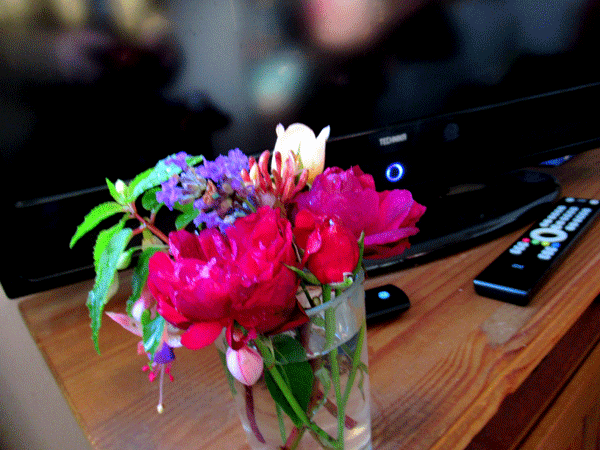
A Round-Up

Nov. 6th, 2025 11:48 am
hobby_gardening: (Default)
It has been some time since I wrote here. This is mainly because I have done little in the garden, partly due to weather but also poor health. I had done a lot of work in earlier months so the garden is tidy apart from a resurgence of weeds which will be easily dealt with when the soil dries. I also still need to plant out my apple tree.

I plan to sow Ladies Bedstraw seed in the spring as I think the autumn window has closed. We bought a strawberry barrel which will have to be assembled, filled with compost and planted once the frosts have passed. There's a relatively new strawberry plant called Rhapsody which was developed in Scotland, is very hardy, is a generous cropper and has good flavour. That is very tempting and I will certainly get at least some plants of that variety, but it might be best if I try a mixture to see what works best in our conditions.

I have an old cold frame to disassemble and dispose of, which will clear space exactly where I need it for the strawberry barrel, on a south facing wall. That may be rather a task!

I don't plan to make many other changes. The petunias have been a great success but I thought of replacing them with perennials - maybe Chinese Asters.

Autumn

Sep. 2nd, 2025 03:35 pm
hobby_gardening: (Default)
The second day of September already! Things are winding down. One of my roses finished flowering some time ago. The other two persist, a beautiful dark red and a cream that goes through various colours.


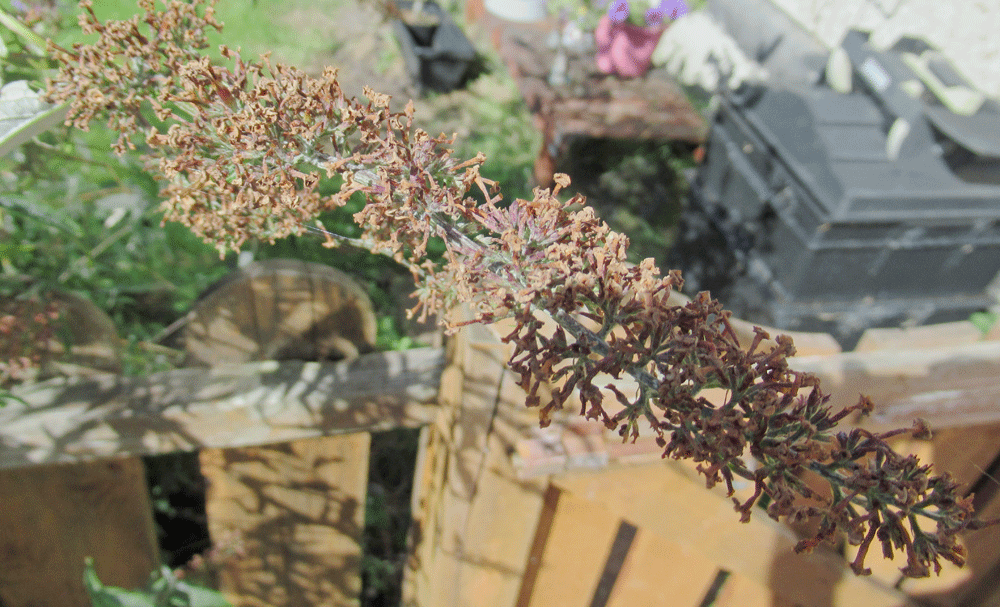
The buddleia, practically overnight, went from purple blooms to russet seed-heads. Any remaining butterflies will be disappointed at its passing but there's still some lavender. The buddleia will have to be trimmed, always a big job with much detritus to be taken away. The honeysuckle continues to bloom but there are many faded flowers now. I'll cut it back too, after flowering. I've pruned the clematis already. It had a long flowering season which finally finished a couple of weeks ago.

I continue to wage war on the weeds, mostly creeping buttercup. I have carried away bags of them over the last month. I plan much weeding, tidying up and maybe even some sowing, before the cold defeats me. I'm susceptible to the cold but I shall try to be brave.

Wildlife

Aug. 19th, 2025 01:23 pm
hobby_gardening: (Default)
The garden is a decorative space but more and more it's also about wildlife. My border of roses and flowering shrubs would be a desert for many insects so I introduced the buddleia and lavender. The early flowering lilac is appreciated by some insects.


Hosted on Fotki

I stopped using harmful chemicals. One year there were no aphids at all, and that was alarming. They're not creatures that you want to see but their total absence is very worrying. In subsequent years they have appeared again, thank goodness, and I leave it up to the hoverflies and their larvae to keep the aphids under control. Sadly I haven't seen a ladybird for years.


Hosted on Fotki

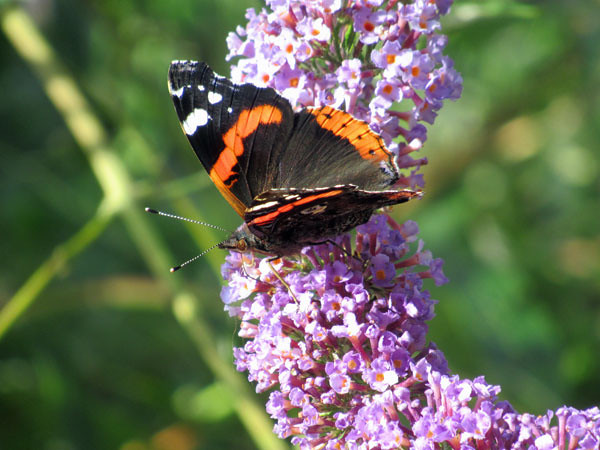
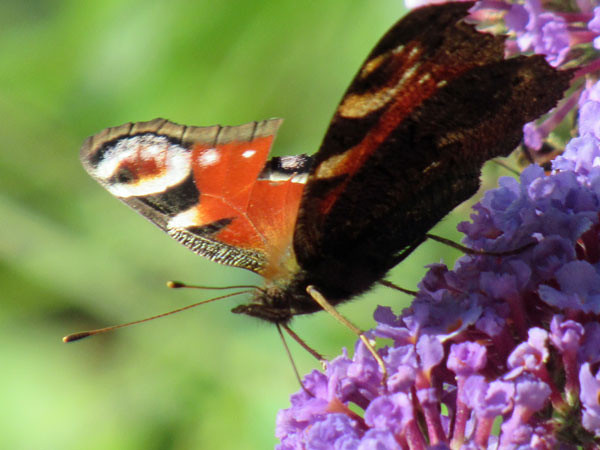
It has been a better year for butterflies. We have red admirals, the occasional tortoiseshell and, to our delight, a peacock butterfly.

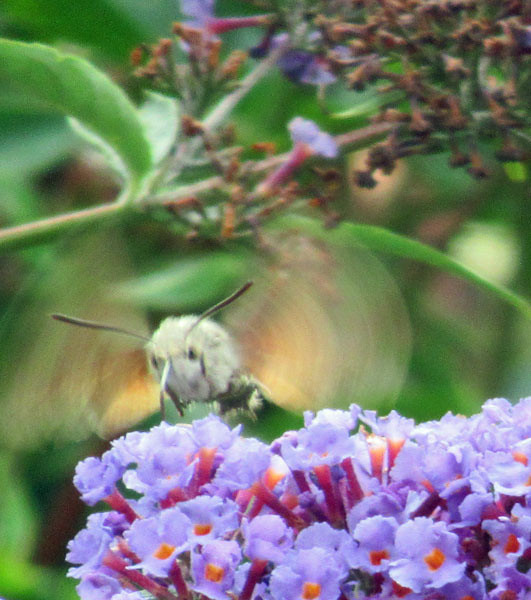
On Sunday Deb spotted something strange hovering over the buddleia. We studied this strange creature, most likely a day-flying moth, as it hovered over the flowers, extending its long proboscis but never settling. Deb said it behaved like a hummingbird and that became the successful search term. It is a hummingbird hawk moth. It seems that several hawk moths appear here in the north and they all like the plants called bedstraw.


Hosted on Fotki
(I love the arcs of his blurry wings in this photo)

I had two patches that I had left to grow for the insects and birds. Unfortunately they became totally infested with creeping buttercups to the exclusion of everything else. I decided to clear them and start again. That sounds like a trivial task said quickly! It isn't. One patch had been dug before so it isn't too bad. The other had never been dug in my time. It's hard work, being on the clay that is so prevalent in our Old Red Sandstone geology. My hope is that I can clear it in the next couple of months then seed Ladies Bedstraw which will take hold over the autumn and winter and flower next year. They have a profusion of yellow flowers. These should attract several day-flying moth species and many other insects. Bedstraw is an invasive plant with a behaviour not unlike the buttercup which it will replace. It extends long stalks which take root when they touch the soil. Its invasiveness isn't a concern as the shape and size of the plot will limit its spread.

August

Aug. 9th, 2025 04:03 pm
hobby_gardening: (Default)
August seems like a practice run for autumn. Several things are over and will need pruning now. Not the clematis, though. That has flowered all summer long and is still going. By this time some plants are running out of steam, so I give them a boost with Blood Fish and Bone, high in phosphate and potassium, but not nitrogen. That promotes flowering and steady growth, not the crazy burst of leaf growth that you get with nitrogen.

There's so much to do and both the weather and my health get in the way. I was quite ill yesterday but I pushed on and harvested the last of my grown-in-the-bag potatoes. Another good crop, especially the pink fir apples which are not so nobbly this year. I don't know why. We plan to make potato salad with some of them using Deb's recipes, either Bavarian or Westfalian. This method of growing potatoes has been a success and I have learned a lot from it.

I made a start on clearing up the weedy patch beside the shed. I let it go last year for the insects and birds but it is an extension of the border and I need the space. I'm using the garden weasel for this job, so much more effective and easy than using a digging fork. There are Pulmonaria and bluebells there. They'll have to come out along with the weeds unfortunately. The bluebell bulbs will be replanted but I doubt that the Pulmonaria will survive. I do love them and will rescue them if I can. Failing that, I'll buy more.

The weed removal is mostly buttercups though there's a little grass. There are self-seeded St. John's Wort there and I may leave one or two. They're not cultivars, just the wild species. I like their yellow flowers.

That will be the first job and it must be completed thoroughly with not a weed left. I'm thinking of covering it with cardboard over the winter. Maybe. The main thing I need the space for is my dwarf apple. It isn't doing well in a pot and I think it was a stupid idea in the first place. I will release it from its confinement and plant it in the ground. It will be happier there.
hobby_gardening: (Default)
I've done all sorts of things in my life. Many of them got dropped from boredom, others from age and infirmity. Gardening persists, even though the more physical aspects of it become more daunting. What is it about gardening that has retained a lifelong hold on me?

My parents were farmers so I grew up constantly aware of growing things. By time I was 20 I had moved away from agriculture and my interest in growing things became transferred to whatever patch of soil I could make a garden. Several of them were on horrible soil: a garden full of builders' debris, dense and barely manageable clay and Dornoch's acid sand. These were all good experience and training.

My last two gardens, in Helmsdale and here have been on altogether better soil. pH and biodiversity have had to be dickered with, especially here, where I have a mysteriously sterile flower bed with no worms at all and few other invertebrates. Careful composting makes up - a bit - for these absences. I still try to bring in earthworms, so far unsuccessfully.

That's the soil, the basis for everything done in the garden. I work mostly with perennials, usually flowering shrubs and even their survival is the source of much satisfaction. Ideally I would like to have acres instead of a few square yards. I have to accept my limitations, though, and accept that growing most vegetables makes little economic sense and would be a waste of my limited energy.

The exception is potatoes. To most people a potato is just a potato but for us Highlanders, once as dependent on the potato as the Irish, we are potato epicures. Indeed there is, or used to be, a potato called Epicure.

Due to lack of space, I grow my potatoes in bags and this has been a great success. It's a delight to watch such a vigorous plant growing, going through its various stages. They're in flower now, an indication that harvest is coming closer.

Gardening is not all plain sailing, of course. I gave up most chemical assistance and that makes control of pests, diseases and weeds more difficult. The exception I make is altering pH to suit individual plants. Weeds thrive. We are reminded that a weed is "a plant in the wrong place." I don't subscribe to this liberal sentiment. Take the Creeping Buttercup, a plant that propagates both by seed and extending stalks which root and make another plant. Buttercups have no place in a garden and I name them noxious weeds! I promise myself that come the autumn I will utterly eradicate them. But then it's too cold and wet and I am defeated. The buttercups celebrate.

If everything one did in the garden was automatically met with resounding success it would become a bore. There was a time I detested aphids, now I worry that I see so few. As a result I see no ladybirds at all. Things like that remind us that we must work with Nature, not against it. It is a cause for celebration that I see more insects this year than last.

Weigela

Jun. 22nd, 2025 03:54 pm
hobby_gardening: (Default)


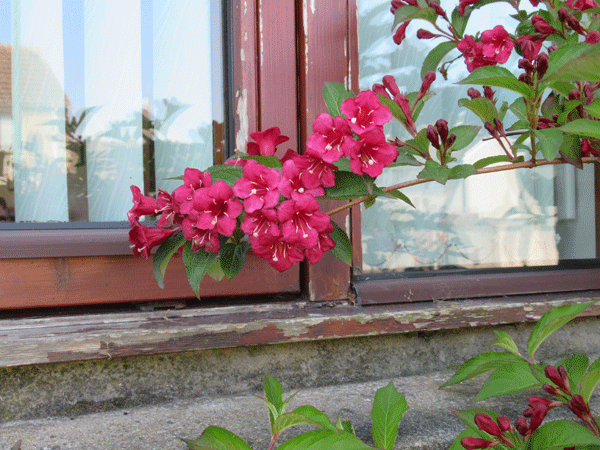
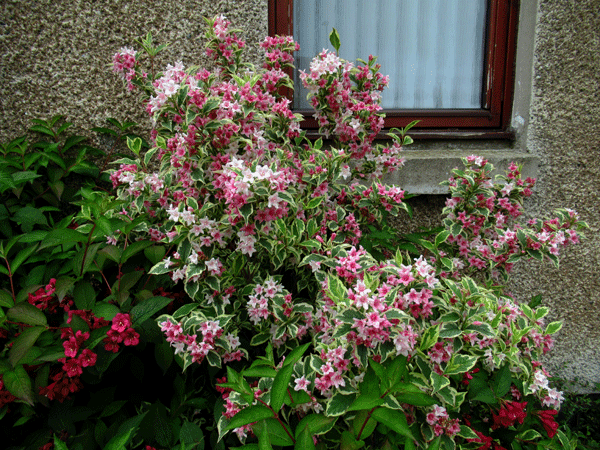
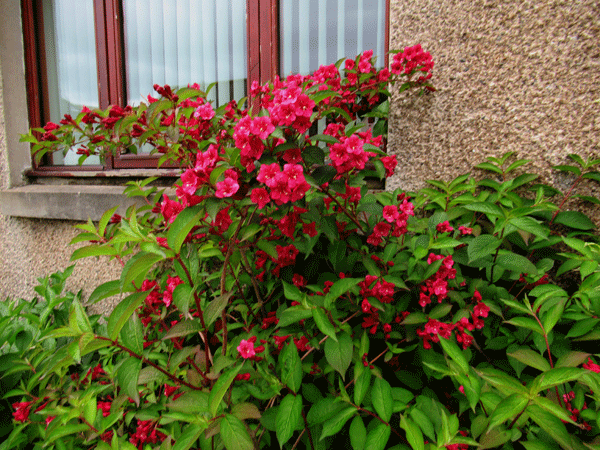
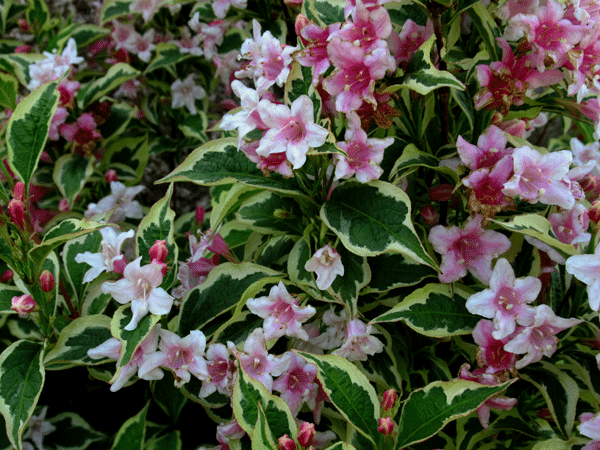
What can I say about the weigela? For most of the year it's a pleasant green or variegated shrub, then in June it becomes a blaze of colour - dark red, pink or white.


In the early 80s I was establishing a garden in Gorebridge. It wasn't easy as the ground was dense, grey clay, concrete in dry weather and chewing gum when wet. I carefully researched shrubs that would do well in those conditions, a more demanding task in those pre-internet days.


One of the shrubs recommended was the weigela. My funds had to be stretched so I only bought one, a deep red. From the first year it performed so well. As has happened so often in my life, we moved and left that garden behind.


It was only when I moved here that the conditions that weigela like were replicated. I bought four, a couple of small ones, a large red one and a gorgeous variegated with pink and white flowers. My weigelas have been just as satisfying here as they were 300 miles further south, 40 years ago.

Flowers

Jun. 10th, 2025 12:46 pm
hobby_gardening: (Default)
The garden is slow this year due to the long spring drought. The clematis has managed a few flowers, the honeysuckle is full of buds and the weigela alone is fully in bloom, with its red, pink and white blossoms. The roses, however, are very poor. Most years they would have shown their lovely reds and pinks but there's hardly anything so far. The lady across the way has a lovely yellow rose, profuse with flowers. I confess to shameful jealousy.

In other years the buddleia would be flaunting its purple clusters but not 2025. Surely it will happen soon!


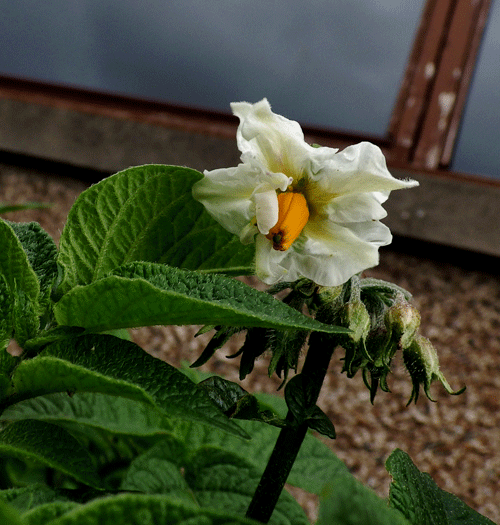
There is one delicate white and yellow flower that pleases me. It isn't any of my flowering shrubs or colourful annuals; it's the humble potato. All those other shrubs and plants will bear flowers for flowering's sake but the potato blooms to let me know that harvest isn't so very far away.

This first flower hints that in three weeks or a month, we'll be cooking our own tasty new potatoes. This is the last furlong or two in the race. It's now that I must force myself to be patient - no sneaking a preview of the crop.

Calathea

Jun. 5th, 2025 12:42 pm
hobby_gardening: (Default)
I'm sorry to say I'm not a success as a blogger these days. Years ago I had a more general blog in LiveJournal and it was mostly daily and usually several paragraphs. Now, I think my time is divided between so many things and my need to write is fulfilled in other ways.

Today my subject isn't quite gardening but we don't have to be too strict about it. I hate the word "strict"!


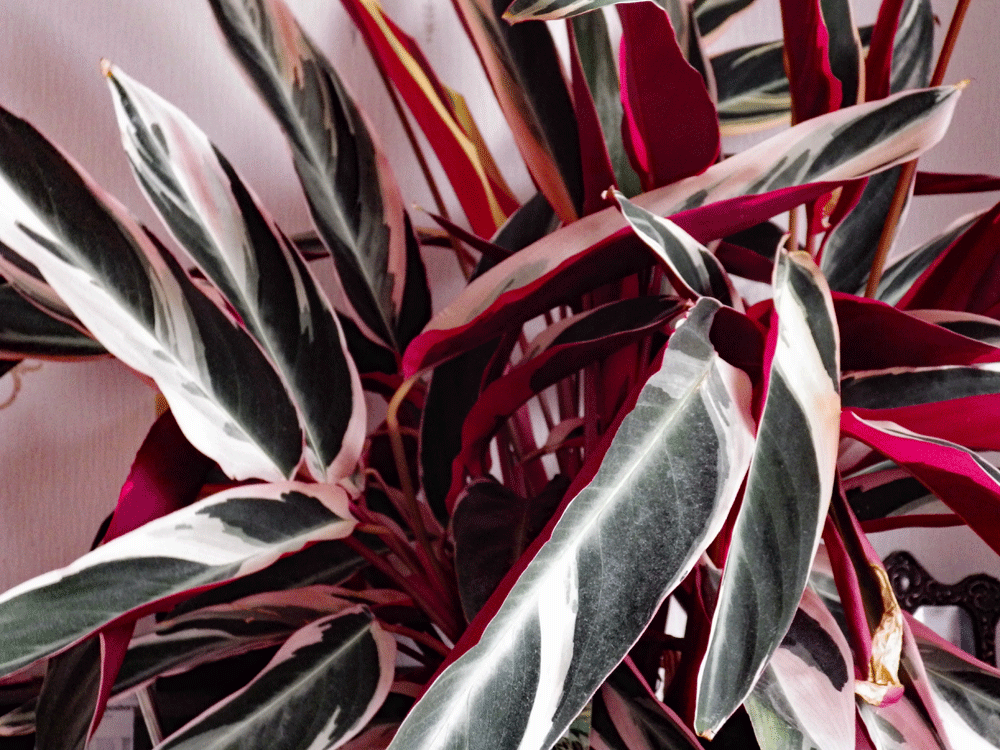
A year ago a very dear friend presented us with a houseplant, a Calathea. We're not really houseplant people as this flat, with its narrow window-sills, doesn't lend itself to that. But this was Van's plant and so appreciated because of that. I worried about keeping it alive. Calathea's natural environment is the floor of the jungle, with half light at best and a pretty constant temperature. Also it would be almost constantly moist from the rainfall that filtered down from the canopy.

I couldn't replicate those conditions and I feared it wouldn't survive the cold of our winter. I can't afford to keep the heating on night and day! I placed it near a window but mostly screened from direct sunlight. I bought a good mister and gave the leaves a good dousing every morning. I watered sparingly. The plant thrived. It has sailed through its first winter and has doubled in size.

It's a splendid, colourful plant with its green and red leaves. In the course of a day it moves quite a lot, leaves rising and falling and rotating. The movement is usually very slow but every now and again we'll catch a movement of a leaf out of the corner of one's eye. That seemed rather creepy at first but we're used to it now and it's just the plant doing its thing.

It is also known as the Prayer Plant which is appropriate as dear Van is a religious lady. Her plant is constantly praying for us, unreconstructed heathens though we are. Van is always in our minds but she has moved away. We're in regular contact but we don't see her. We see her lovely plant though, and feel her presence.
hobby_gardening: (Default)
I've been neglecting this blog dreadfully and must do better. The weather has been dry, a mixed blessing. I was able to get on with things in the garden but the deep rooted shrubs are very slow growing due to the drought. I can't water them as they would each need gallons. I water the potatoes in their bags, the petunias I just planted and the camellia which has to have an ericaceous feed frequently, applied with water. That's quite enough!


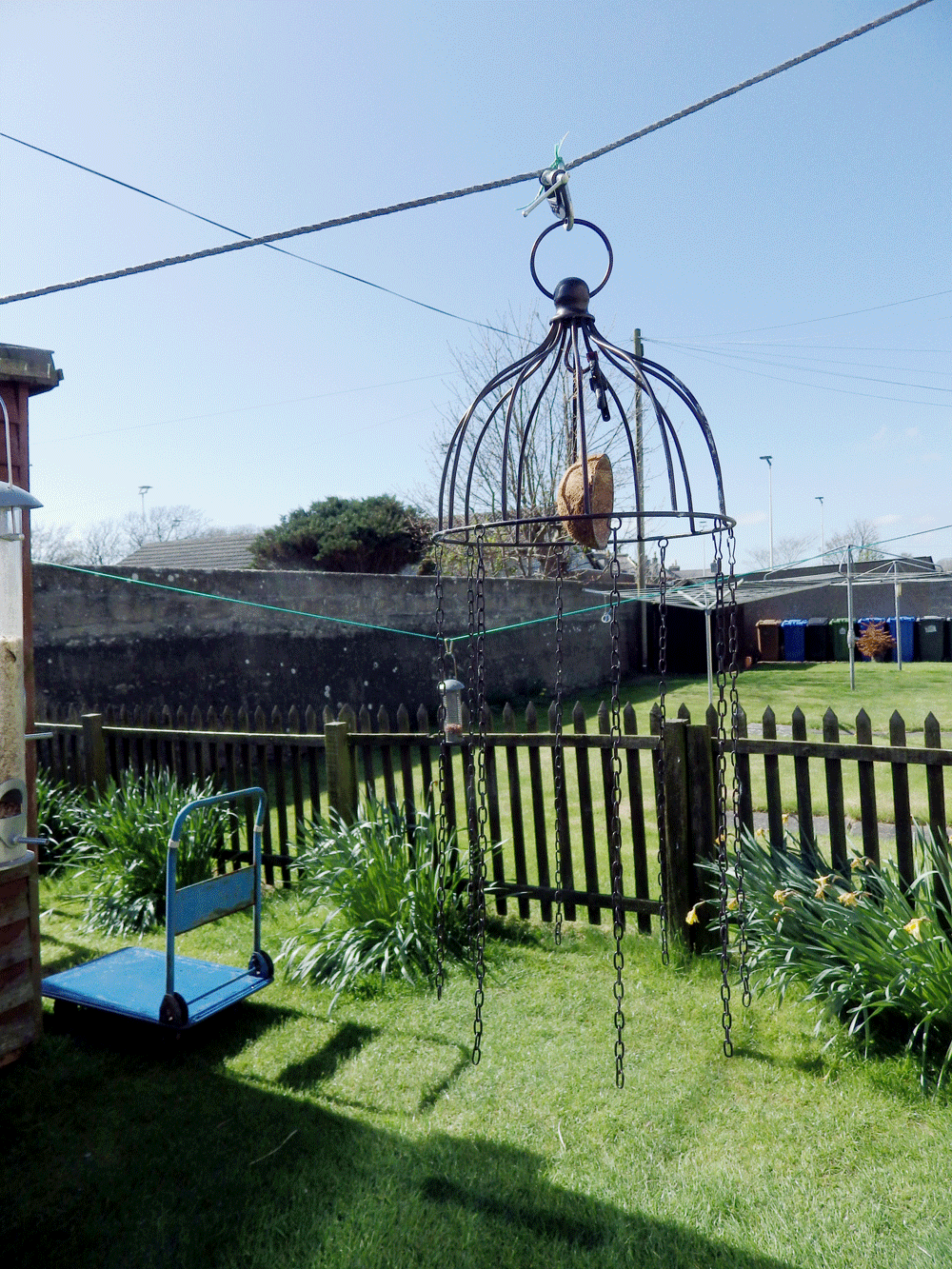
Much of my garden activity centres around the songbirds. Recently I added to their diet to help them through the breeding period. I got mealworms (disgusting maggots) and half-coconuts filled with suet and seeds. Unfortunately starlings, jackdaws and rooks descended upon them and cleared them out in minutes. The little birds like the bluetits, who love suet, got no chance. I looked around for a remedy and came upon The Medusa Seed Dispenser Protector. It covers either very well and the dangling chains disturbed the crows. It looks like a trap to them and they keep away. The starlings still love it but they can only get at it one at a time, so the coconut lasts hours instead of minutes. The mealworms still go quickly but not quite so quickly.

These extras are a purely springtime thing and once these are finished I won't buy more until this time next year - unless it's a hard winter but that's very unlikely.

I've caught up with most of the spring garden work, with the exception of the compost in the tumbler compost maker and the worm farm, so they're a priority now. Much of the compost will go to the shrubs in the front border. They've been deprived in the past and will benefit a lot from the rich compost.
hobby_gardening: (Default)


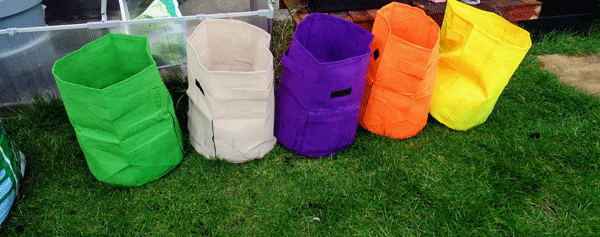
I finally planted my potatoes! There were so many delays, several due to ill health, but now I have five bags; two containing Pink Fir Apple, two containing Duke of York and one with Sharpe's Express. It took one and a quarter large bags of compost.

I'm not entirely pleased with the bags. They're about two, two and a half feet tall which I think is too short. I would have preferred three and a half to four feet - more room for the potatoes to multiply.

As the shaws (leaves) come through I'll add seven or eight inches of compost, all the way to the top, which should be in July, I believe. Looking forward to the lovely early spuds already!
hobby_gardening: (Default)
I learned how to prune roses from an elderly gardener when I was in my twenties. It goes something like this:

1. Study the rose.
2. Remove dead wood.
3. Remove weak growth.
4. Hope that you have something left to work with!
5. Reduce to an outward growing bud all round.
6. Remove all central growth.
7. Walk away.

These guides work well with strong, healthy roses. What do you do when all the previous year's growth is spindly? That's what I'm faced with, with two roses. They had spent several years in containers and last year I transferred them to the soil. I knew it would be difficult; roses don't like to be moved. What makes matters worse is that both of these roses are of gradual growth - not vigorous. If I followed my usual pruning plan I would be likely to cause more weak growth.

Instead I've cut them back severely to just above the graft. The weather has been dry for weeks but as soon as we have rain I'll apply Fish, Blood and Bone Meal to wash in. I'm hoping for strong growth that I can prune in the usual way, better late than never. If not I'll just accept what comes and hope for better next year. They're both very attractive roses and I hope to keep them. They may just need more time to settle into their new positions.
hobby_gardening: (Default)
I haven't written here for some time; the weather has been against gardening and my health has not been very good. Both now show small signs of improvement. There is much to do: pruning of roses, buddleia, lavender, honeysuckle, clematis and quince. Also, maybe slight tipping of branches of weigela at the front. All of these things could be done now.

There are encouraging signs of spring: buds on all the deciduous shrubs, daffodils quite tall and other bulbs coming along despite having been disturbed during weeding. I will be growing four varieties of potatoes in bags this year, and maybe one or two seed potatoes in part of the flower bed. I'll be buying compost for that this week. The seed potatoes will need to be exposed for chitting in mid-March for planting at the end of the month.

I have a large quantity of homemade compost from the worms and the tumbler compost maker. I will try to use it all to mulch and feed my plants, front and back.

I'm considering only one plant purchase, a vigourous rose for the front.
hobby_gardening: (Default)
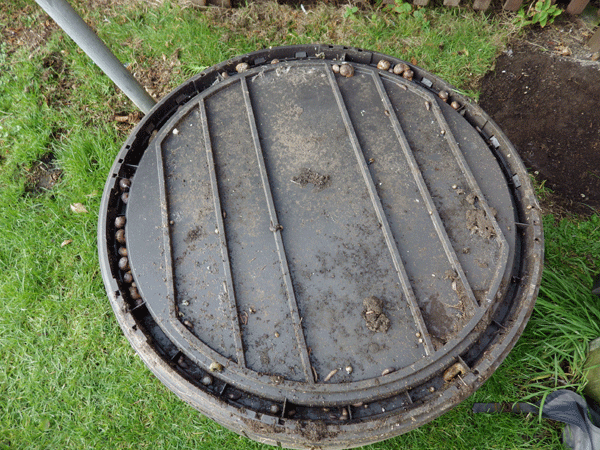
I have a large box to contain the various types of bird seed and peanuts. There, every day, I fill the bird feeders. There's a certain amount of overspill, contained within the box. Every once in a while, maybe annually, I pull the box out into the lawn and tip out the contents. The birds have a feast.


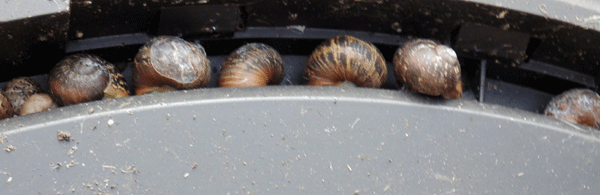
The box has to be turned upside down and given a thump to get all the seeds out. It was then I noticed many snails and a few slugs, resting in the recessed rim of the box. We're constantly told that these gastropods are the gardener's worst enemy. All my plants that they might eat are set upon or within copper mesh which these creatures cannot cross. They're not my enemies. Indeed they're part of the decomposition process, making rotting plant material available in the soil once more.


These molluscs are known as, simply, The Garden Snail. They are eaten in some places though, I hasten to add, not here! I assume they are hibernating under my box. Wikipedia tells me they are hermaphrodites and have mating sessions of several hours! In a year they may produce six batches of fifty or so eggs. If it wasn't for hungry birds we would be overwhelmed by snails.

Such fascinating creatures!
hobby_gardening: (Default)
My dear mother, of fond memory, carried out farm work and housework and managed to be a gardener in quite a big way too. She had a quarter-acre of vegetables. That might not sound like much, not until all the carrots, onions, cabbages and Brussels sprouts are being swamped by big hairy-chested thugs of weeds and you're at the beginning, armed with no more than a hoe.

She also had a decorative garden on three sides of the house. Though she did love a visit to the garden centre she rarely bought plants but acquired cuttings wherever she went. She was very successful in making them grow, too. I bought a bunch of flowers for her once. There were three different roses in it and she raised them all into vigourous bushes. Roses, when not grafted, will take two or three years to settle down but after that they grow just as well.

When we lived in Dornoch I had a greenhouse and raised a lot of plants which I shared with her. The perennials I remember were tree lupins and butterfly bushes. There was cotoneaster too, scrambling over one corner of the house, and another creeper which I can't identify now.

One of the few shrubs she did buy was dogwood and she lived to regret it because the thing grew like Jack the Giant Killer's beans. I remember having to cut it down almost to the ground but it would be towering over us in just a few months.

The three things she inherited from the previous occupants were excellent rhubarb and an elder tree that never flowered. There was a rose bush by the front door. It was a straggly thing that barely flowered. One day the cattle got out and among their other depredations they are the rose bush to the ground. They must have remarkably tough mouths. The following year the rose had a mass of strong growth and we had cut flowers into the autumn. As the old gardener said, "Let your worst enemy prune your roses."

Treez

Nov. 21st, 2024 03:40 pm
hobby_gardening: (Default)
I've had several tries to write about trees. I'll try again today. It used to be said that Caithness was a great plain devoid of trees. That's complete nonsense, of course. Caithness doesn't have as many trees as most other counties but there are many, all the same.

I so dearly love trees and wish I had some in my garden. I don't and it would be a bit futile planting any at my age! When we take a run in the country I see so many, some of them neglected hedges where the individual trees have grown tall and spindly along the field border. Those are so common. It seemed that one generation was really keen on hedges; it must have been quite an outlay to plant them all. Subsequent generations didn't appreciate them and let them go. That's okay by me - I love the trees.

Though I can't identify them, clearly several different species were used for hedging and also around farmhouses. Here and there, too, there are clumps of trees, often deciduous.


I enjoy trees in leaf and also in their bare, skeletal winter guise. They make such different patterns against the sky. The manse garden in Watten has large, mature trees. There they were sufficiently sheltered to grow huge in undistorted form, unlike the coastal trees that are stunted and bend away from the prevailing, salty wind.

There are those people who will fell a tree without a thought, or chainsaw them into horrid, abnormal shapes - perhaps an even worse fate for the poor tree. A pox on those people. A tree with decades of growth is a precious being. Trees may not communicate with us but there is so much going on with them, above and below ground. Leave the trees alone.

Summer and winter I enjoy them, the complexity of their different leaves, and the bark, runnelled or smooth. A tree can be, and almost always is, a home to a city of creatures. As they retain carbon they may help to keep our species going. Trees are the good guys!

Hips

Nov. 12th, 2024 06:48 pm
hobby_gardening: (Default)
A lady across the road has a lovely yellow rose. It's prolific. She does nothing to it and you'd think the flowering was over but then it will burst out again. More than that, it produces rose hips. That's something I like to see. Red or green, they shine and are eye-catching in autumn.

My roses don't make rose-hips, or at least they haven't. That may be due to my habit of dead-heading late in the season, a practice I would like to give up. Many of the modern hybrids don't produce hips but I don't know if that would apply to mine if they were left alone at the end of September. We'll see next year, Deo volente.

Flahrs

Nov. 10th, 2024 01:36 pm
hobby_gardening: (Default)
It was at the end of August/beginning of September that what I took to be the last of the roses lost its petals. That's early, very early indeed but I thought it was the mixture of my stopping dead-heading and the poor summer. Also, I was growing so much in the border that perhaps the roses had given up the competition.


Hosted on Fotki

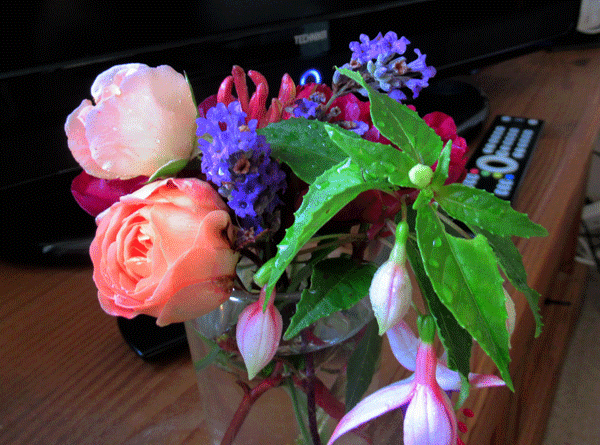
Then, last week, I noticed that one of the miniatures had produced a bright white bloom. Another rose had opened two small but strongly-coloured salmon pink flowers. The deep red rose had suddenly flowered again too, quite unexpectedly.


Hosted on Fotki

They surprise me in the best of ways. What do I do now? If I cut them for the house it may encourage them to keep flowering - not a good thing for next year. Nonetheless, that's what I propose to do. Let's enjoy the last of summer 2024!

Seedz

Nov. 7th, 2024 05:17 pm
hobby_gardening: (Default)
Every year at this time my bird feeders empty more slowly. There are even days when I don't have to refill them at all. It's easy to see why. All around there are seeds and fruits: the autumn bounty. These natural foods are undoubtedly more attractive to the birds. For instance, I haven't seen a blue tit for a couple of weeks. They'll all be back later but I do miss the little fellows, zooming in to grab a few seeds - only sunflower hearts for them - then perching on the fence to carefully wipe their beaks, and gone in a blur.

Bird flu was declared gone in the British Isles a week or two ago but now it's back. Time to disinfect the feeders and wear rubber gloves, though the risk to humans is low. I'll make sure my feeders aren't spreading it.

I'll try to look out for fatalities but it isn't easy; seagulls dispose of little bodies right away. On that depressing note I'll finish but I can lift the gloom a little by saying there's no reason to think the flu is here in the North.

Burdz

Oct. 29th, 2024 04:16 pm
hobby_gardening: (Default)
The beauty of my garden is not only flowers. I have bird feeders which I keep filled. This is a totally selfish act; I delight in the beauty and behaviours of the many species that come to my garden. There are all the little songbirds: sparrows, goldfinches, blue and great tits, siskins, greenfinches the near invisible wren and the timid dunnock. I've probably missed a few. Then there's the medium-sized birds: the noisy starling and the melodious blackbird. We have the larger ones, pigeons, a solitary wood pigeon, jackdaws and rooks. There are more occasional visitors like the chaffinch and the sinister sparrowhawk who comes to do her shopping at the bird Tesco. That's a sad thing but she is magnificent and must live too.

I love the tits of both varieties. They zoom in, consume a few sunflower hearts, sit on the wire and wipe their beaks. Then they are just gone. So fast! I don't know why chaffinches are not here. Forty miles south in Helmsdale they were perhaps the commonest birds at our feeders. They flocked with the sparrows and behaved pretty sparrow-like except they spent a little more time on the ground. There's a range of hills between there and here and it must define the outer edge of their area.

I've described the dunnock as timid, and mostly he is, creeping out from a bush to grab a seed. In late spring, though, he loses his shyness. He sits on the fence and sings all day. And he's loud. Very loud indeed. He's calling on mates (plural). Dunnocks have interesting love lives.

I could go on but I'll leave that for another time. But the garden pays for itself in beauty and entertainment. What's the cost of a few seeds, whether for sowing or feeding the birds against the joy that they bring?
hobby_gardening: (Default)
For one reason or another I haven't been very active in the garden recently and the weeds have taken advantage. The worst offenders are the buttercups. Other weeds can be hoed but buttercups need to be individually removed. They have gripping roots that will regenerate if not removed entirely and they are all connected by strands. Really, they're all one plant, spreading vegetatively. This was useful when I used weedkillers. I applied a dab of touch-weeder to a buttercup and that took out a few more and weakened the growth of others. Now I have to remove them one by one using a hand fork or a specialist weed remover. A big garden fork would be better but I damaged the rotator cuff in my shoulder some time ago. That limits what I can do. The weeds are very pleased about that.

We've had three dry days. If we get one more I shall organise a weed massacre!

Profile

hobby_gardening: (Default)
hobby_gardening

November 2025

S M T W T F S
      1
2345 678
9101112131415
16171819202122
23242526272829
30      

Syndicate

RSS Atom

Style Credit

Expand Cut Tags

No cut tags
Page generated Apr. 11th, 2026 08:36 pm
Powered by Dreamwidth Studios